Klarna has introduced a new in-app inbox designed to help customers identify legitimate communications and reduce the risk of impersonation scams.
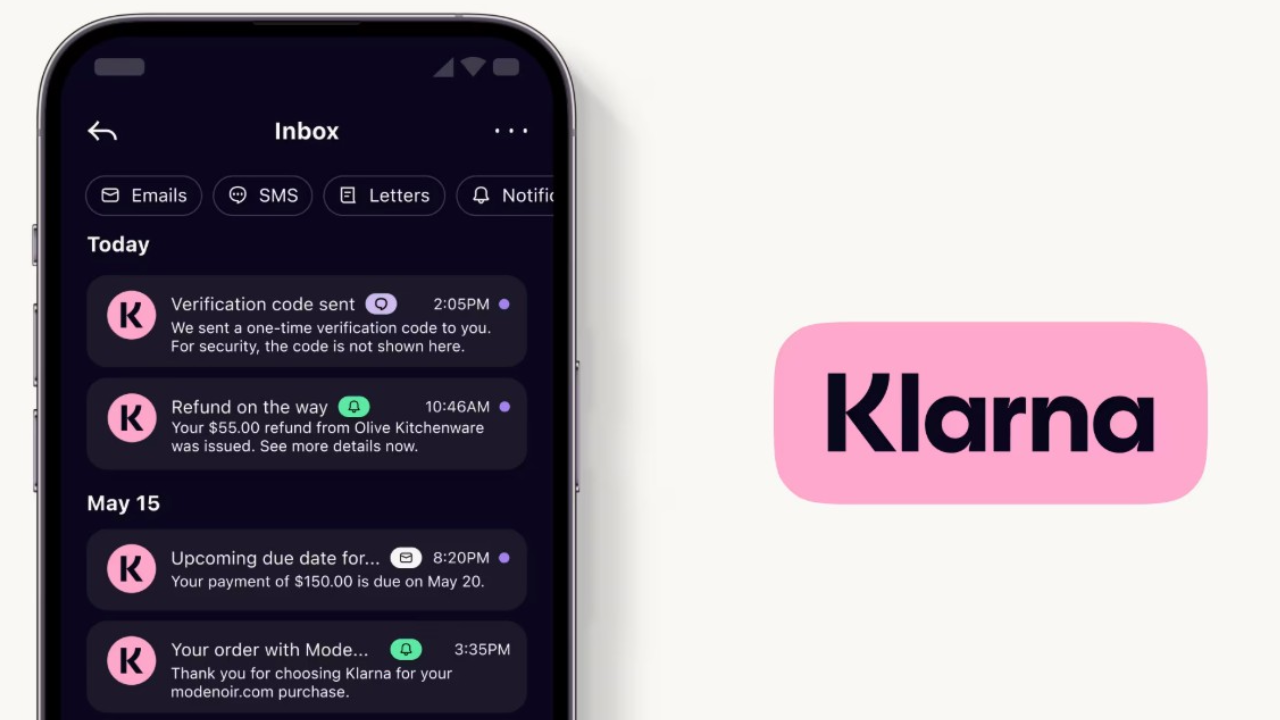
The feature consolidates all official Klarna communications into a single authenticated environment within the company’s mobile app, allowing users to verify whether messages claiming to originate from the fintech are genuine.
Under the new system, emails, SMS messages, push notifications, and even physical mail correspondence sent by Klarna will be mirrored inside the app. If a communication does not appear within the inbox, customers can assume it was not sent by Klarna.
The launch comes as financial institutions and fintech firms face growing challenges from increasingly sophisticated phishing attacks and impersonation scams targeting consumers through email, text messages, and social media channels.
By centralizing official communications within a secure, signed-in environment, Klarna aims to provide customers with a simple method for validating messages and avoiding fraudulent attempts to obtain personal or financial information.
The initiative reflects a broader industry trend toward stronger customer authentication and communication security as fraudsters continue to refine social engineering tactics.
Recommended: Keyrock Report Highlights Macro and Crypto Shift
Security and trust have become increasingly important priorities for digital financial services providers, particularly as consumers rely more heavily on mobile banking, digital payments, and online financial products.
Founded in 2005, Klarna is one of the world’s largest buy now, pay later (BNPL) providers, serving millions of consumers and merchants across multiple international markets. The company has continued to expand beyond installment payments into broader banking, payments, and personal finance services.
The new inbox feature is expected to roll out across Klarna’s customer base in the coming weeks as part of the company’s wider efforts to strengthen user security and fraud prevention capabilities.