Paystack has launched Canvas, a fully redesigned merchant dashboard that marks the company’s first major interface rebuild in its ten-year history.
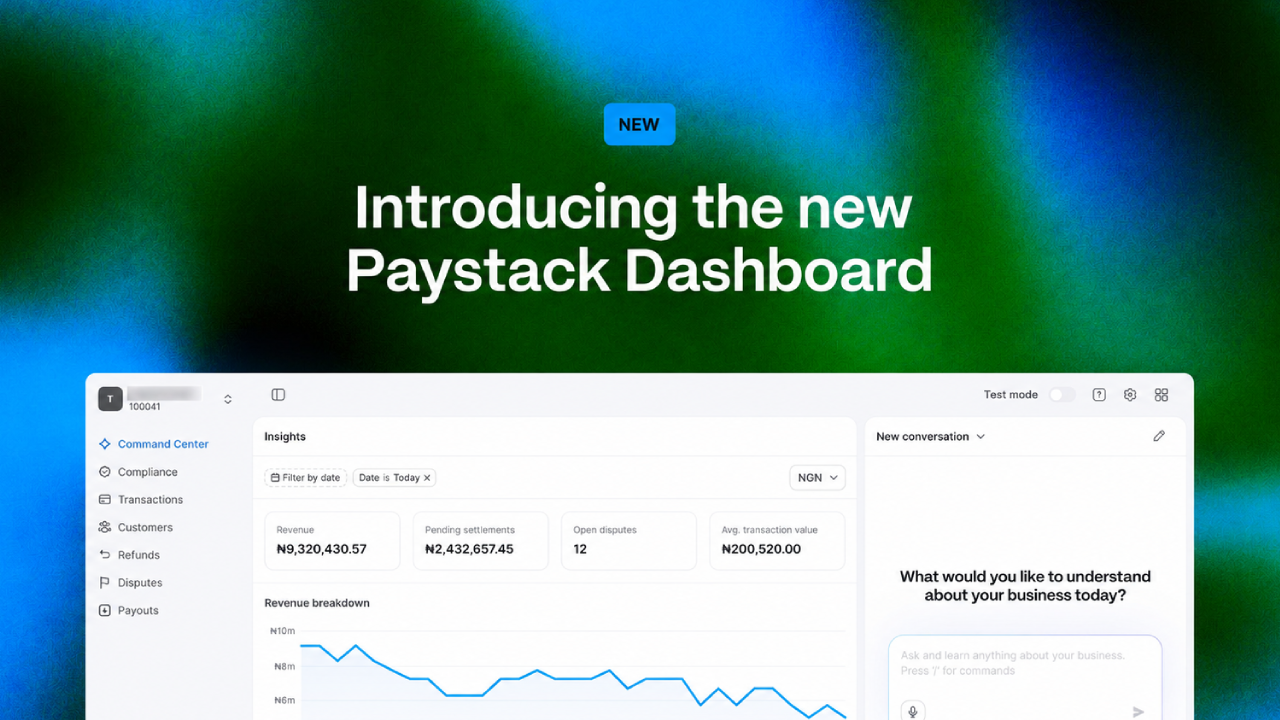
The new platform transforms Paystack’s dashboard from a traditional payments management interface into what the company describes as an AI-native operating environment for merchants, combining conversational intelligence, modular infrastructure, and full mobile functionality within a unified experience.
The launch reflects a broader shift across fintech infrastructure platforms as AI-powered operational interfaces become increasingly embedded within merchant workflows, analytics, and financial operations.
According to Paystack, the original dashboard evolved incrementally over the past decade as the company expanded its payments and merchant services ecosystem, eventually creating workflow complexity for businesses operating across multiple products and devices.
Canvas was rebuilt around three core architectural principles: AI-native integration, modular composability, and a unified design framework powered by the company’s internal design system, Pax.
The redesigned interface organizes merchant activity into two primary environments, Payments and Products simplifying navigation across transactions, settlements, refunds, transfers, and future modular services.
One of the platform’s largest additions is the new AI-native Command Center, which allows merchants to interact with operational data through natural language queries rather than traditional filter-heavy interfaces.
Users can ask questions related to revenue performance, transaction activity, disputes, or operational trends, with the system dynamically returning contextual responses through charts, tables, and structured dashboard components.
Paystack said the AI layer is tightly integrated with verified merchant data infrastructure to improve reliability and reduce hallucination risks.
The company built what it describes as a deterministic validation framework that restricts AI-generated responses exclusively to authenticated operational and transaction data.
Additional safeguards introduced during development included adversarial testing procedures, privacy controls, and a full Data Protection Impact Assessment focused on compliance integrity.
Canvas also introduces full mobile parity between desktop and smartphone experiences, enabling merchants to complete operational workflows entirely from mobile devices.
Beyond the interface redesign, the rollout reflects a broader infrastructure modernization effort within Paystack itself. The company said the platform was built using a modular internal architecture that allowed teams to redesign frontend systems while continuing to leverage existing payments infrastructure without large-scale backend migration requirements.
Canvas is now available globally to Paystack merchants, initially focused on core payments functionality, with additional product integrations expected over the coming months.